
Tidio Lyro
Tidio Lyro is an AI customer support agent that answers questions, follows guidance, and hands off to your team.
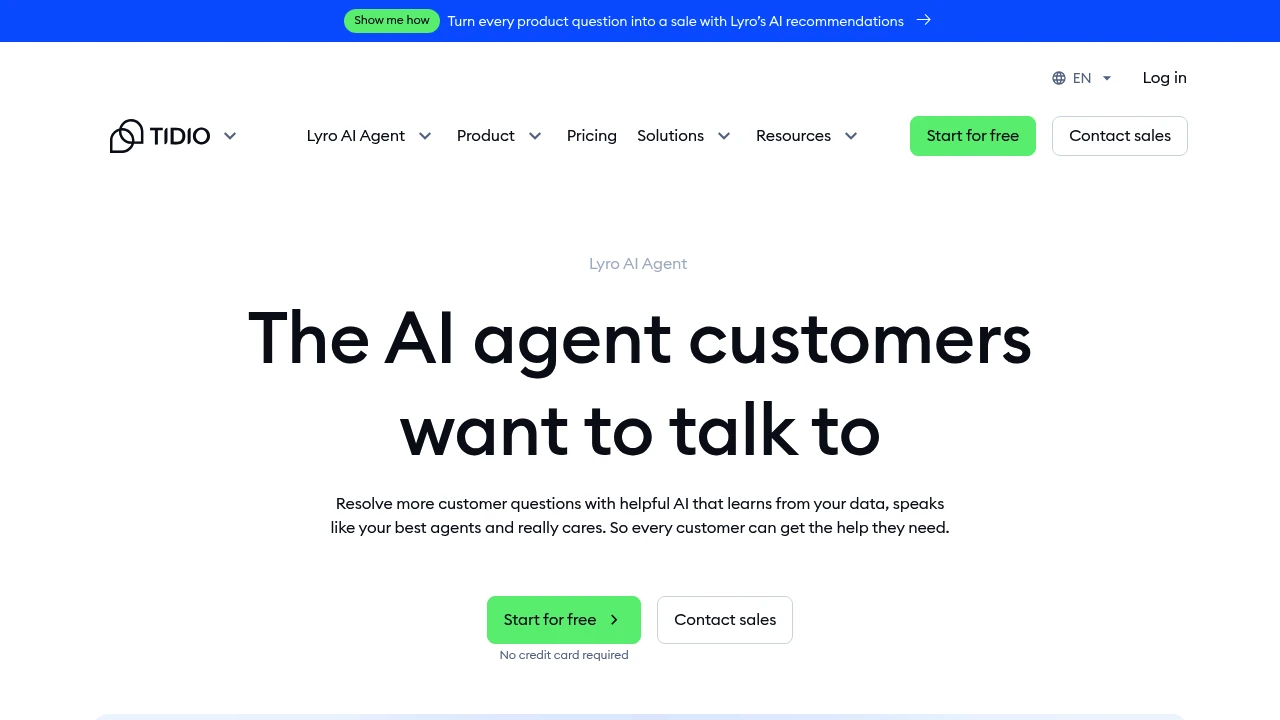
Tidio Lyro is an AI customer support agent for teams that want faster answers without replacing their current help desk. It learns from your support content, replies in your brand voice, and hands conversations to a human when needed.
Key Highlights
- Uses your knowledge base and guidance to answer questions
- Connects with Zendesk, Intercom, Salesforce, Tidio, and 20+ platforms
- Includes human handoff rules, real-time monitoring, and escalation controls
- Supports Smart Actions for order updates, lead qualification, and MCP workflows
- Starts with 50 free Lyro conversations and a 7-day trial
What Makes It Different
Lyro is not built like a scripted flow. Tidio says it uses Claude from Anthropic and in-house models rather than ChatGPT, then restricts answers to the content and guidance you provide.
The other difference is deployment flexibility. You can run Lyro inside Tidio or add it to an existing stack through Lyro Connect if your team already uses Zendesk, Salesforce, Intercom, or another help desk.
Features & Capabilities
Teams feed Lyro with help center articles, FAQs, product information, and support rules. From there, it answers customer questions, handles multiple replies inside one Lyro conversation, and lets agents monitor chats or jump in. Guidance controls shape tone, style, escalation rules, and sensitive-topic handling.
Lyro can also move beyond answers. Smart Actions automate recurring tasks such as order status updates and lead qualification, while product recommendations guide shoppers to relevant items. Reporting shows resolution rates, CSAT, and conversation patterns so teams can add missing knowledge.
User Ratings and Testimonials
Tidio publishes customer examples rather than a Lyro-specific public rating. Suitor reports a 97% decrease in average response time, while Your KAYA says Lyro automated replies to simple FAQs and freed consultants for more personal cases.
The main tradeoff is that Lyro depends on the quality of your support content. Higher monthly limits, Lyro Connect, custom analytics, and managed AI service options sit behind paid plans.
Pricing & Value
- Free Plan: $0/month, includes 50 one-time Lyro AI conversations and 100 Flows visitors reached
- Lyro AI Agent: starts at $32.50/month for 50 Lyro AI conversations, available as a stand-alone product
- Growth: starts at $49.17/month, adds advanced analytics, permissions, assignment, macros, and more billable conversations
- Premium: contact for pricing, includes managed Lyro AI service and a guaranteed 50% Lyro AI resolution rate
Lyro fits support teams with repeat questions, enough help content to train it well, and a clear handoff process for cases that still need a human.
FAQs
It is free to try: every Tidio account gets 50 one-time Lyro conversations. A 7-day trial also lets you test paid features.
Tags:

You might also like
 bisibility — Free beta: Track your website’s keywords, Google rankings, Search Console insights, and share of voice.


